Paid Research Studies in India: Formats, Pay, and Safety
Find legitimate paid research studies in India: formats, eligibility, home-device needs, payment options, and fraud checks.

India’s 2025 telecom survey found that 85.5% of households had at least one smartphone. That makes remote qualitative research more practical for many people, provided each study’s device and privacy requirements are clear.
Paid research studies in India can include individual video interviews, moderated group discussions, usability tests, photo diaries, and in-person sessions. You qualify because your life, work, household, location, language, or product use fits a specific brief, not simply because you are employed. Confirm the sponsor, requirements, reward, payment date, recording, and support contact before accepting.
We explain the formats, who can qualify, how remote participation works, how to compare opportunities, and what to check before sharing your time or personal information.
What Paid Research Studies in India Can Look Like
We build opportunities around real experiences, not generic opinions. A researcher may need to understand how someone manages a household, uses a professional tool, shops for groceries, or navigates a new app. The format depends on the question they need answered.
Live Conversation Formats
- In-Depth Interviews: A one-to-one conversation by video call or in person. Our published incentive can be up to ₹4,000 per hour.
- Focus Groups: A guided discussion with five to seven participants. Our published incentive can be up to ₹5,000 per session. Public focus-group guidance describes one to two hours as a usual duration, though the invitation always controls the commitment.
- In-Context Interviews: A conversation in a home, store, or other relevant setting when researchers need to understand decisions as they happen.
For more on individual sessions, see our interview guide.
At-Home Diary and Usability Formats
- Digital Diaries: Participants may share photos, brief videos, or notes over three to seven days. This is the relevant format for studies about daily meals, routines, or product use, not an open-ended request to post personal content.
- Usability Tests: Participants use an app, website, or prototype and explain what feels clear, confusing, fast, or difficult.
Our published incentives can be up to ₹6,000 for a diary study and up to ₹3,500 for usability or app testing.
In-Person and Home Formats
- At-Home Ethnography: A researcher observes routines through a home visit or virtual tour, with published incentives up to ₹6,500 per session.
- Product Testing: Participants try a product at home and share structured feedback.
- Shop-Alongs: A researcher joins a participant in a retail setting to understand real purchase decisions.
Who Can Join Paid Research Studies in India?
We match people to a specific research brief, so there is no single “ideal participant.” Homemakers, students, working professionals, caregivers, retirees, and specialist workers can all be relevant when their experience matches what a study needs. Our current registration flow is for adults aged 18 to 55, and each invitation can add its own requirements.
Why Homemakers Can Qualify
Household routines often matter in research about food, financial choices, appliances, personal care, shopping, childcare, and digital services. We may seek a homemaker’s direct experience because it is the point of the study, not because employment status is a barrier.
Why Honest Answers May Not Lead to Selection
A complete and truthful screener is essential, but it cannot create a match where one does not exist. A study may need a particular city, language, product user, device, schedule, occupation, or household profile. It may also close after filling a limited quota.
When Professional Experience Matters
Some IDIs need specialist knowledge from people in roles such as healthcare, finance, technology, education, retail, or business ownership. In those studies, job responsibilities and tools used at work can be more important than general demographics.
Ethical research practice requires participants to understand expected time and payment information before agreeing, as reflected in ICMR ethical guidance. Our joining flow explains how we collect the details that make relevant invitations possible.
How to Join a Session from Home
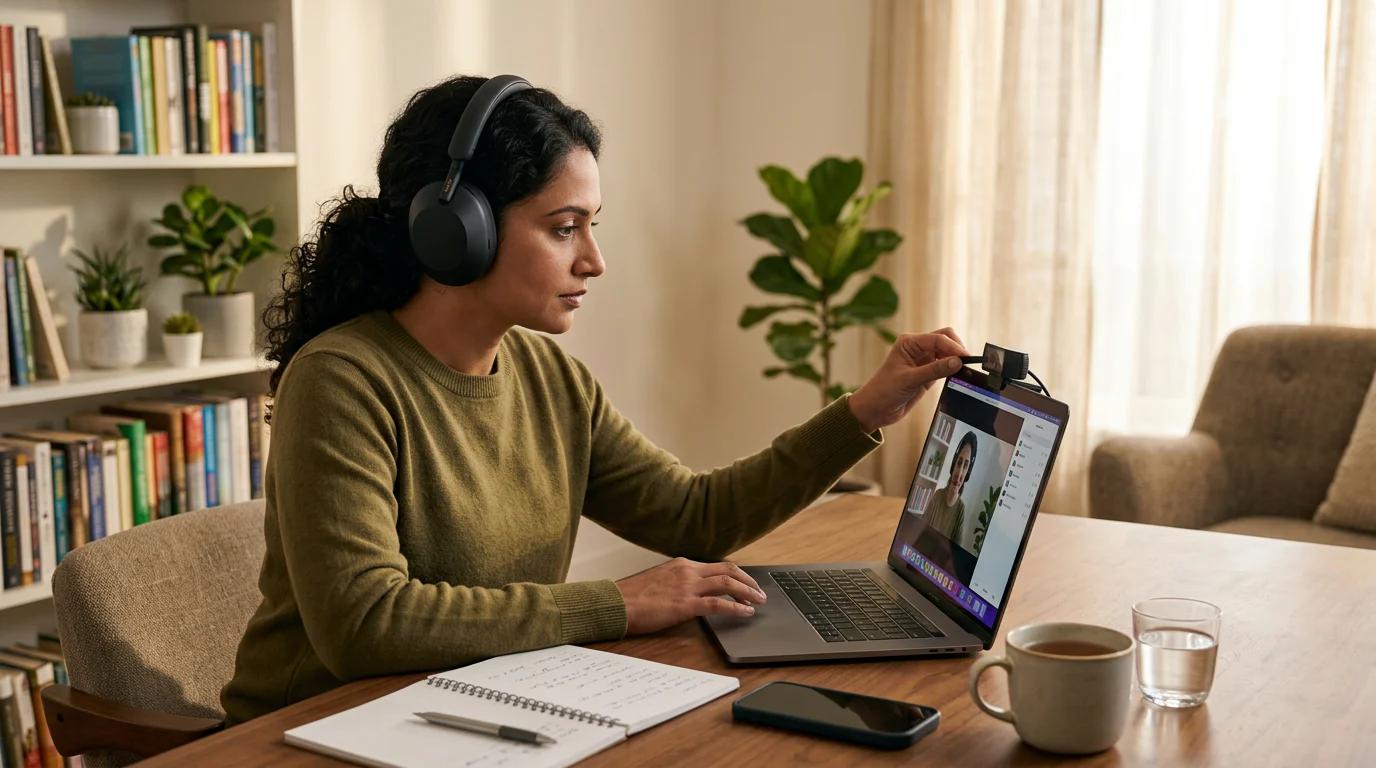
Remote studies can work from a phone or laptop, but only when the invitation permits that device. We make the practical requirements visible before participation so you can decide whether the session fits your space, schedule, and connection.
- Create Your Profile: Share accurate basics such as city, languages, occupation, and contact preference.
- Receive A Match: We send invitations when an active brief fits your profile.
- Read The Study Details: Check topic, duration, incentive, date, device, and any recording requirement.
- Complete The Screener: Answer directly and consistently.
- Confirm Participation: Accept only when you can attend without rushing or multitasking.
- Give Consent: Review what information, audio, video, or images will be collected.
- Complete And Receive Payment: Attend the session or finish the assigned activities, then wait for completion review.
Device and Connection Requirements
A laptop is often best for screen sharing or longer video interviews. A phone may be suitable for photo diaries, short mobile tasks, or sessions specifically designed for mobile participation. Use the device named in the invitation, test your microphone and camera, and charge it beforehand.
Privacy at Home
Choose a quiet private room where you can speak freely and avoid being interrupted. Do not join while driving, shopping, or handling another commitment that prevents you from taking part attentively. Our Qualfacto panel collects the profile details needed to send opportunities that fit.
Language and Scheduling
Tell us the language you are most comfortable speaking and choose a time you can protect. Clear language preferences help researchers recruit for studies where a participant’s natural way of speaking is important.
How to Compare Paid Research Opportunities
A reliable opportunity makes its practical terms easy to inspect before you agree. We recommend comparing the session format, India availability, required device, screening process, payment method, payment timing, privacy terms, and available support.
| Platform Type | India Availability | Typical Formats | Device Support | What To Verify | Payment Details |
|---|---|---|---|---|---|
| Qualfacto | India-focused | IDIs, groups, diaries, usability, in-context research | Invite-specific phone or laptop support | Profile matching, study details, consent, support contact | UPI, digital wallet, or e-gift voucher |
| International Research Marketplace | Check each invitation | Varies by project | Check each invitation | Sponsor identity, India eligibility, recording terms | Method, currency, and payment date |
| General Consumer Panel | Check each invitation | Often shorter feedback activities | Often mobile-friendly | Whether the activity is qualitative or a short survey | Minimum payout and withdrawal rules |
| Direct Research Invitation | Check sponsor first | Varies by research team | Stated in the invitation | Named contact, privacy notice, written incentive | Method and expected payment date |
We show the format, required commitment, and practical expectations before you decide. The goal is not to chase every invitation, it is to select the studies where your experience can genuinely shape decisions. Learn more about the brands you influence through participant feedback.
How We Check Payments, Privacy, and Legitimacy
Compensation should be stated before you agree to a study. It reflects the format, time commitment, specialist criteria, and effort involved, so it is not guaranteed income or a fixed hourly wage across every opportunity.
| Study Format | Published Incentive | Payment Method | Published Payment Window |
|---|---|---|---|
| In-Depth Interview | Up to ₹4,000 per hour | UPI, digital wallet, or e-gift voucher | Three to five business days after successful completion |
| Focus Group | Up to ₹5,000 per session | UPI, digital wallet, or e-gift voucher | Three to five business days after successful completion |
| Digital Diary | Up to ₹6,000 per study | UPI, digital wallet, or e-gift voucher | Three to five business days after successful completion |
| Usability Or App Test | Up to ₹3,500 per study | UPI, digital wallet, or e-gift voucher | Three to five business days after successful completion |
Review the reward and privacy details before accepting a session, especially when a study involves photos, recordings, home visits, or sensitive personal topics.
A legitimate invitation should make these points clear:
- Sponsor And Contact: You should know who is responsible for the study and how to reach support.
- Consent And Recording: We should explain what will be recorded, why it is needed, and how it will be used.
- Reward And Timing: The incentive, payment method, and expected payment window should be visible before participation.
- No Upfront Fee: We never ask for a joining fee, activation payment, or banking credential to match you with a study.
- Fraud Reporting: If money has been lost or an invitation appears suspicious, use the official cybercrime portal.
Before accepting an invitation, check our reward details so you understand how session completion and payment work.
Why Join Qualfacto
At Qualfacto, we built our panel for people whose everyday choices and professional experience can improve real products and services. We start with a detailed profile because a better match helps researchers hear from the right people and helps participants avoid irrelevant invitations. When a study is available, we show the format, time commitment, incentive, required device, and practical expectations before you decide. We support individual interviews, group discussions, digital diaries, usability work, and selected in-context sessions across India. We also keep participant questions central: you can review our payout details, privacy information, and participation guidance before committing your time. Registration is free, participation is voluntary, and invitations depend on active study briefs. Our team is available to clarify the next step when an invitation arrives. If you are ready to share honest experiences in an appropriate study, join Qualfacto.
FAQs on Paid Research Studies in India
These answers address the practical questions people ask before joining a qualitative study. For additional help with invitations and rewards, see our panel FAQs.
Can Homemakers Join Paid Research Studies?
Yes. We match homemakers when a live brief seeks their household routines, caregiving perspective, product use, location, language, or other stated criteria for participation.
Can I Participate from Home with a Phone or Laptop?
Often, yes. We confirm the device in each invitation, because video interviews may need a laptop, while short diaries and mobile tasks can allow phones.
Can I Earn for Sharing Daily Food Photos?
Sometimes. A diary study may request food photos, notes, or brief videos over several days, but we disclose its purpose, recording, activity, and reward first.
Why Did I Not Qualify After Answering Honestly?
Your answers may be accurate, yet the brief can require a different product user, city, language, schedule, device, profession, or a quota already filled for the study.
How Do I Identify a Reliable Paid Research Invitation?
Check that the invitation names a sponsor, explains consent and recording, states payment timing, offers real support, and never asks you to pay a joining fee.
When Will I Receive My Payment?
After successful completion, we publish a payment window of three to five business days. The invitation should also state the incentive and payment method clearly.